

NeoSander Premium Combo
Product Details
Compatible Materials
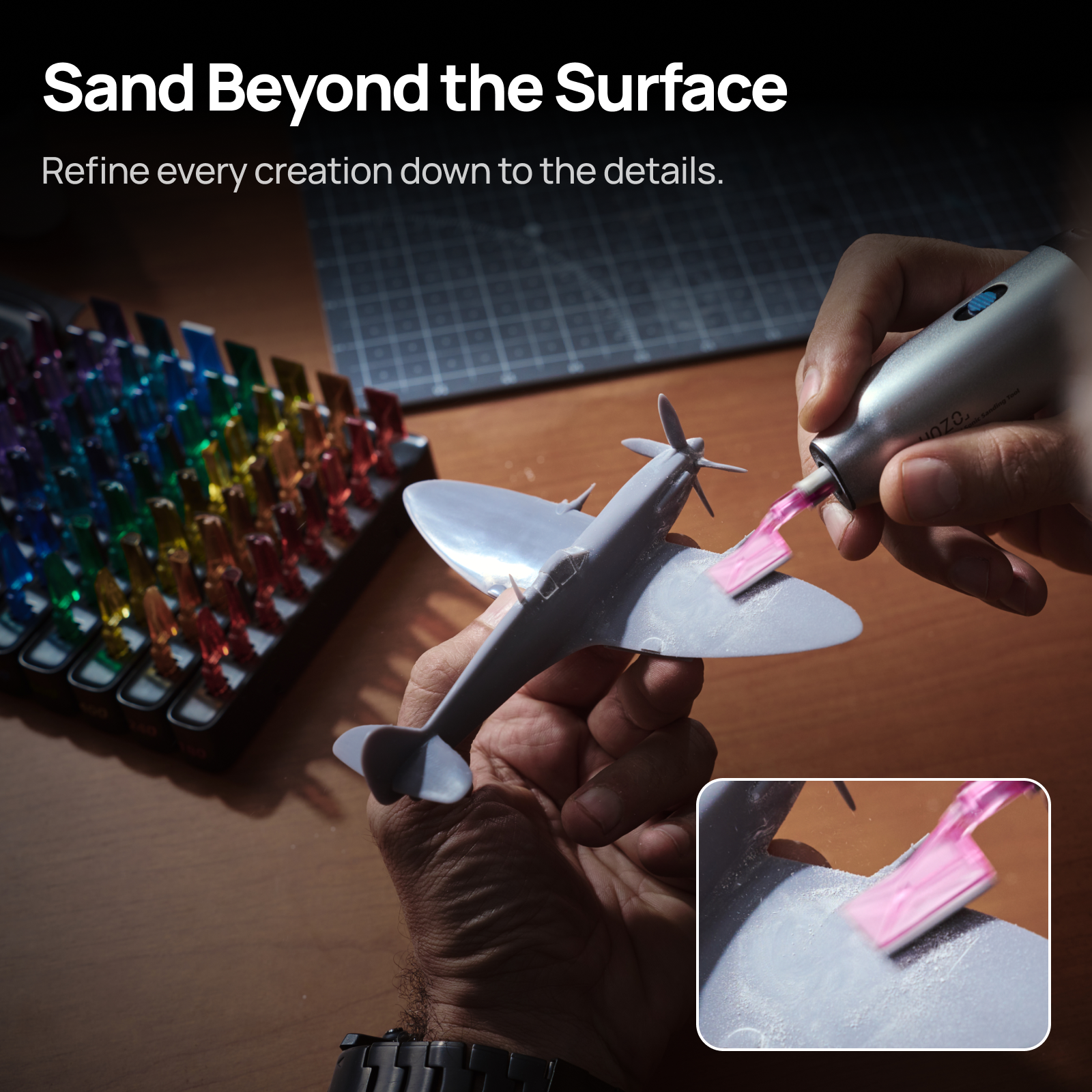
Designed for precision finishing across multiple surfaces:
Key Specs
- Tool Weight
- 89 g (without sanding head)
- Runtime
- 45–240 min
- Charging
- USB-C Charging
- Protection
- IP54 Rated
What's Included
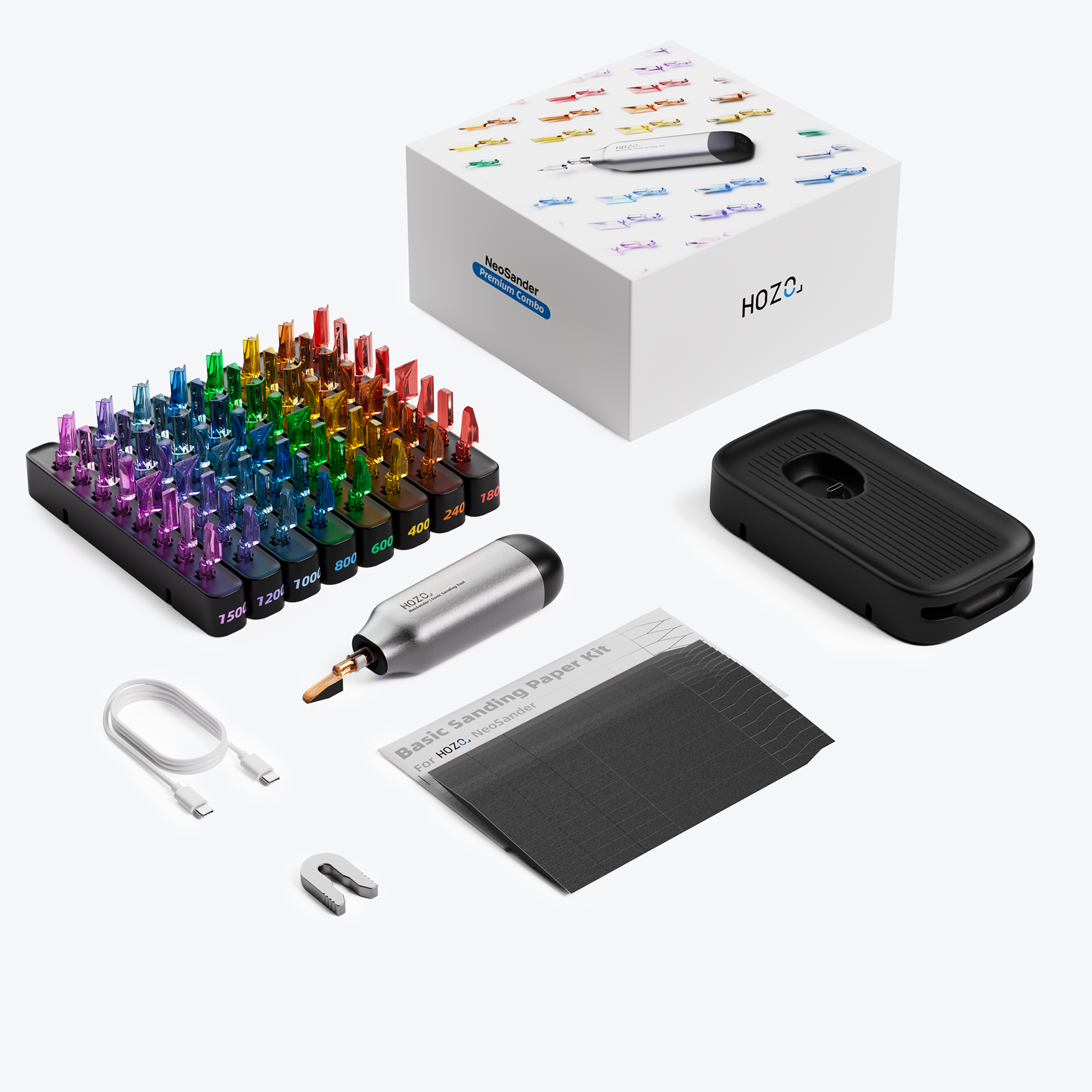
NeoSander Premium Combo Includes:
- NeoSander ×1
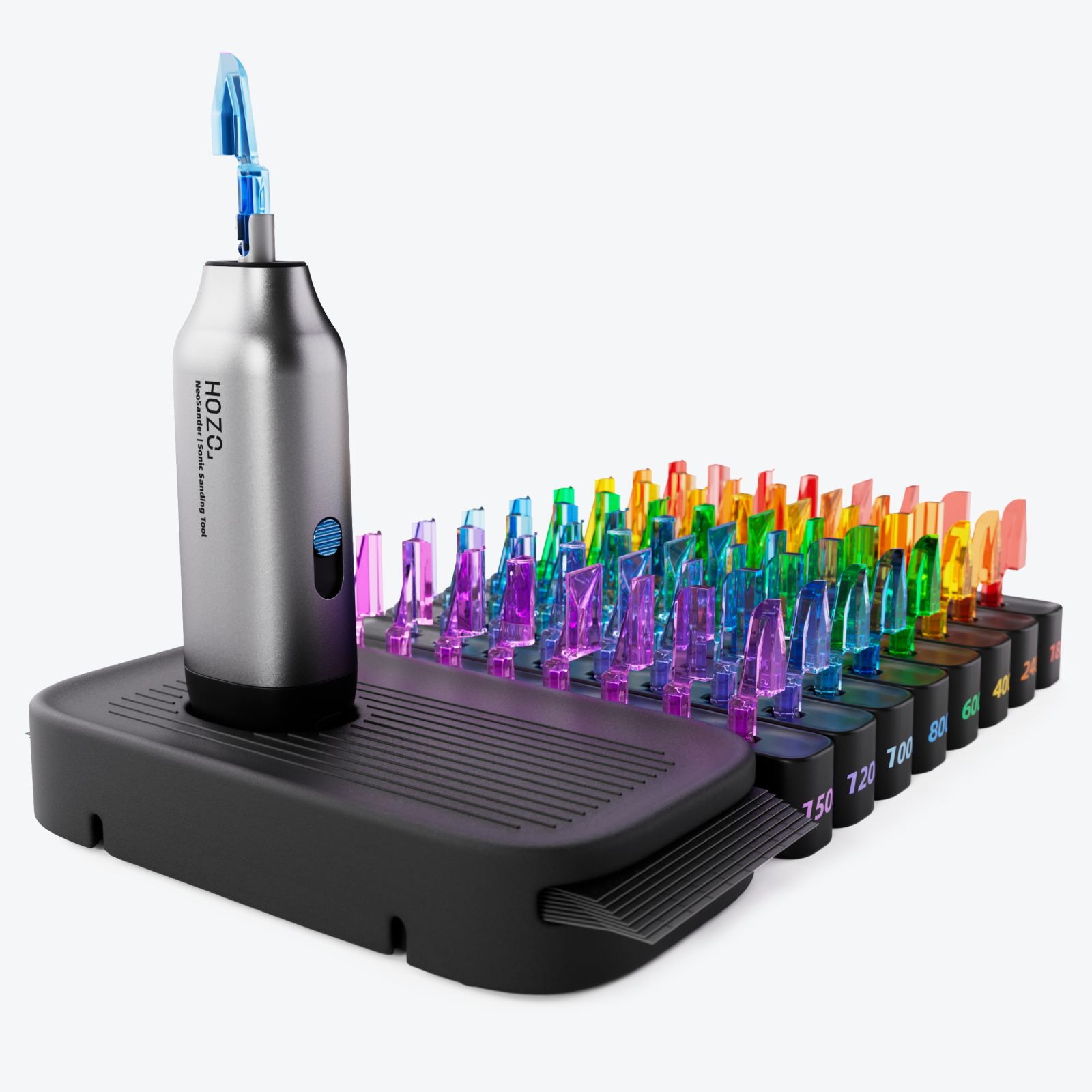
- 64pcs Multicolored Sanding Head ×1
- Basic Sanding Paper Kit ×1
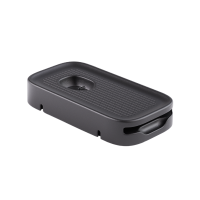
- Charging Dock ×1
- USB-C Charging Cable ×1
- User Manual ×1
Sandpaper Grits Included
NeoSander Premium Combo


Built to Take on Every Task


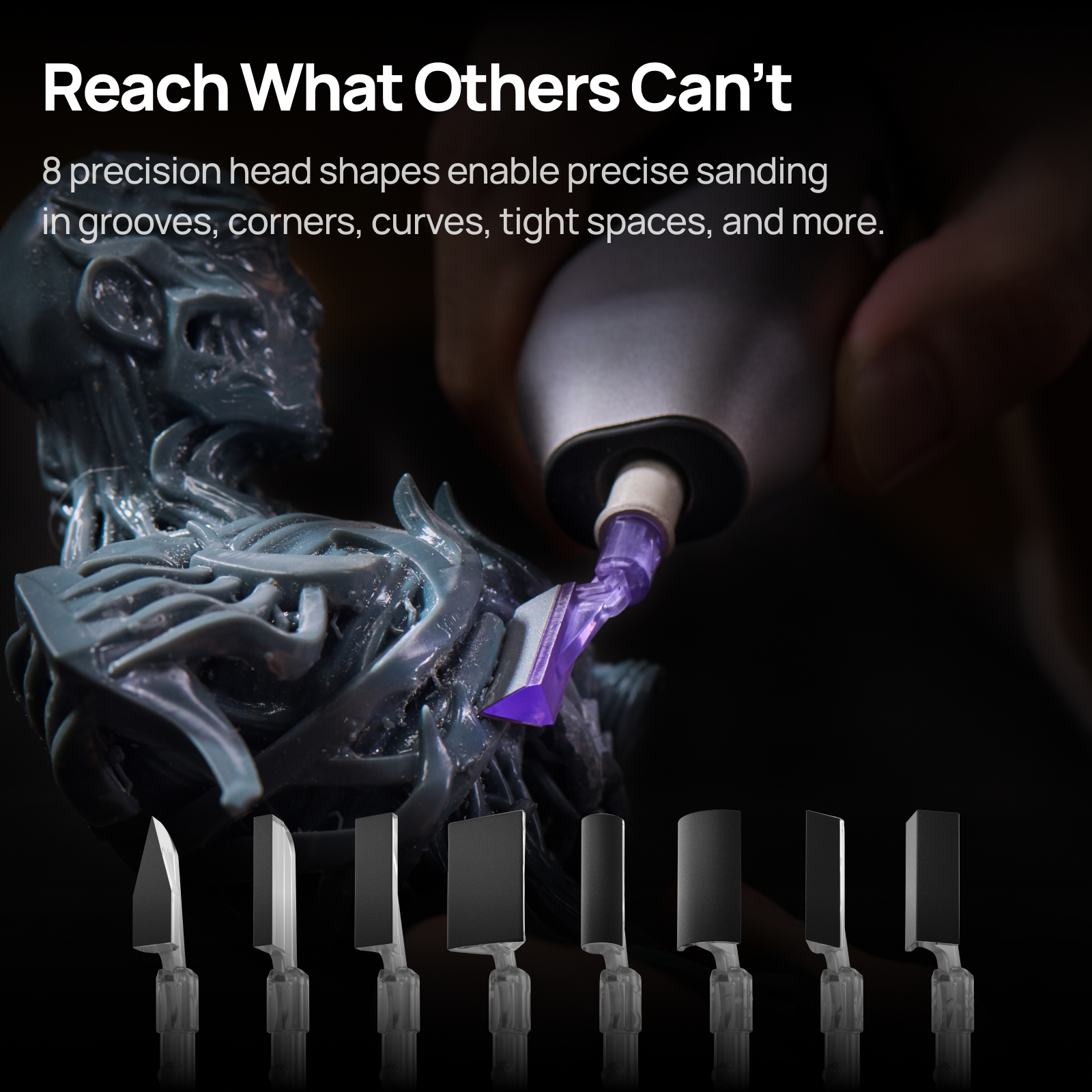
8 Head Types for Every Tight Spot
Tight corners, delicate curves, or hard-to-reach spots—swap heads quickly and sand with precision, right in your hand.

01
Pointed Tip
The sharp tip is extremely versatile, perfect for reaching tight spots, intricate grooves, and fine details others can’t access.

02
Flat (Slim)
Ideal for narrow flat surfaces, delicate edges, and precise finishing in small or confined spaces.

03
Flat (Medium)
Suited for medium-sized flat areas, smoothing surfaces efficiently while maintaining full control and precision.

04
Flat (Large)
Best for quickly smoothing large flat surfaces; works perfectly with foam sandpaper for finer, even results.

05
Half-Cylinder
Excellent for shaping and smoothing curved surfaces, semi-circular grooves, and edges with consistent control.

06
Arc
Slightly more curved than the Half-Cylinder; perfect for arcs, rounded corners, and gently curved surfaces.

07
Acute Angle (45°)
Allows sanding two angled surfaces at once, fitting narrower spots than Flat (Slim).

08
Right Angle(90°)
Ideal for sanding two perpendicular faces simultaneously, creating precise 90° edges and clean corners.

Precision in Every Pass
Controlled, precise sanding in tight spots—no over-sanding like rotary tools.

Smooth in Every Detail
From rough shaping to polished, mirror-smooth finishes with ease.


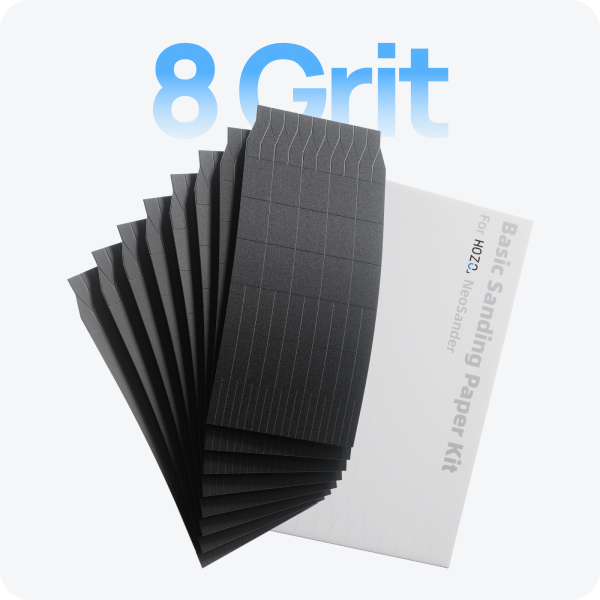
Adhesive Sandpaper
Tight corners, delicate curves, or hard-to-reach spots—swap heads quickly and sand with precision, right in your hand.
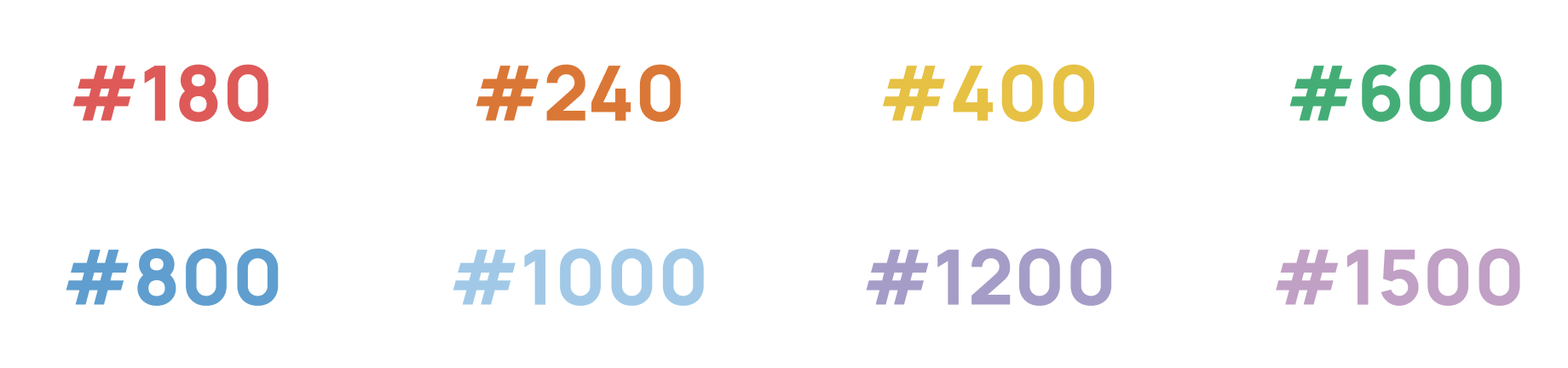

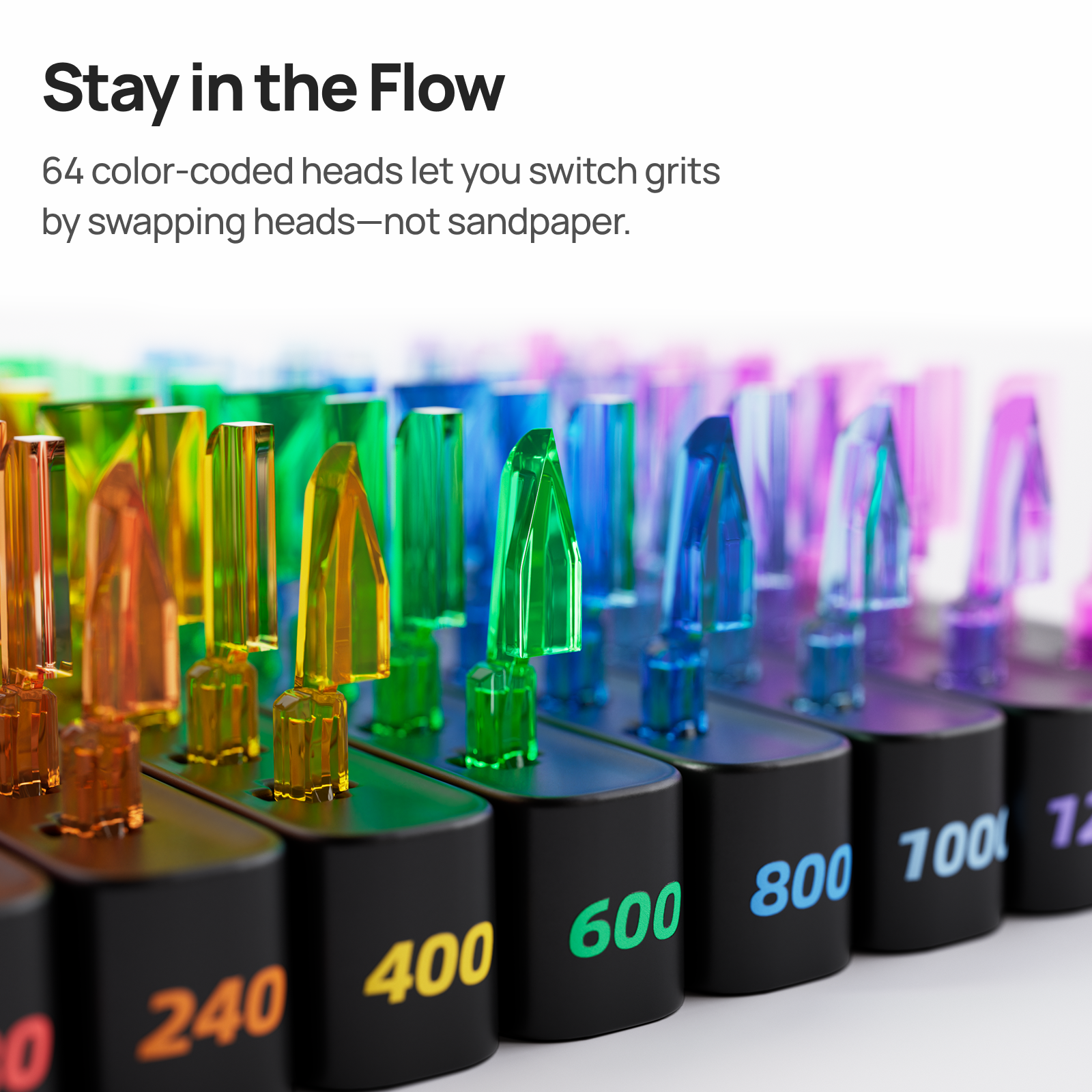
Color-Coded System
With this setup, your grits always stay sorted and ready to swap. From coarse to fine, just grab the head you need, snap it on, and keep sanding.
Accessories That Boost Performance
Expand what your NeoSander can do—tackle tricky details, double as a cutting tool, and make 3D printing more fun than ever.

Two Types Saw Blade
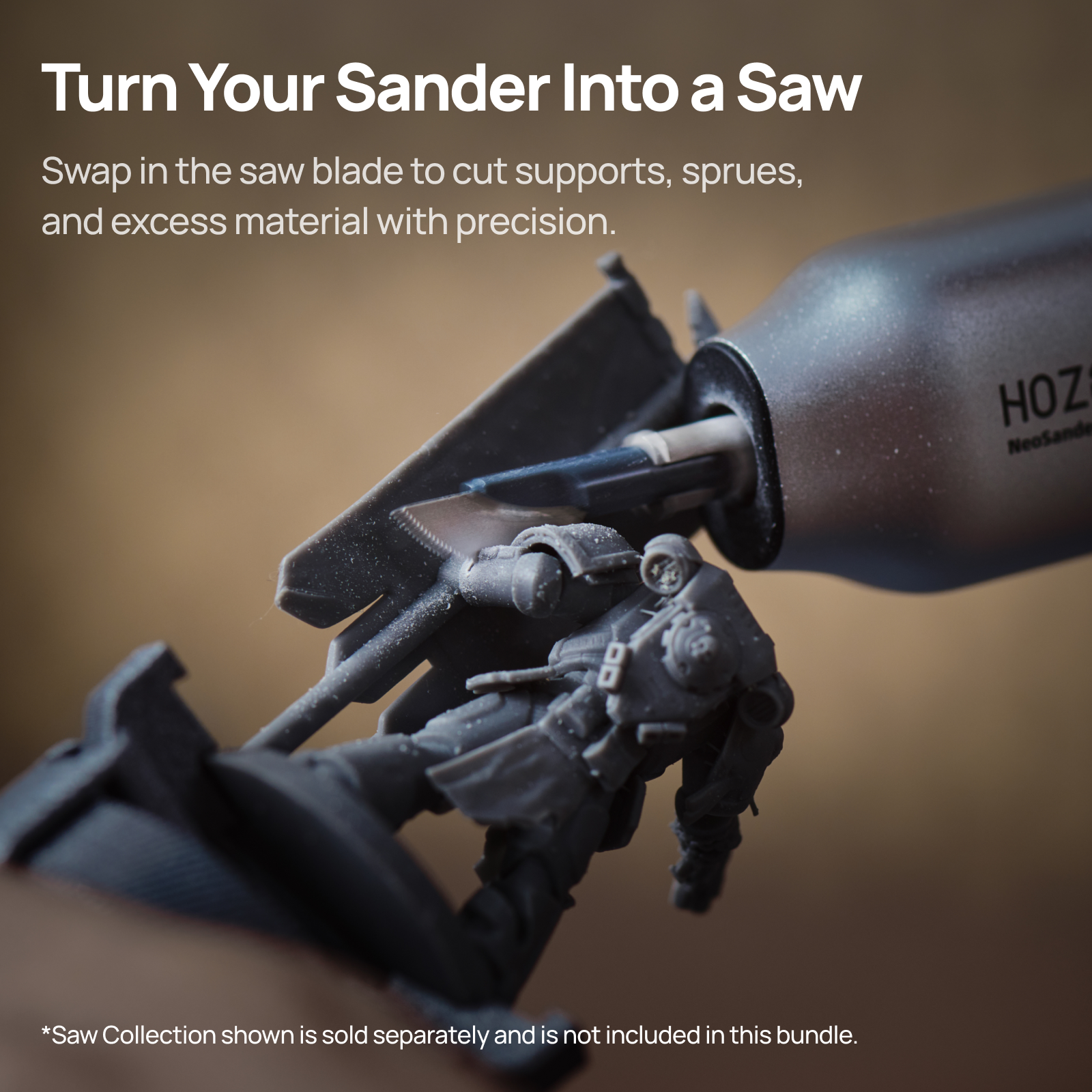
With the optional Saw Collection (sold separately), NeoSander transforms into the world's smallest electric mini reciprocating saw.
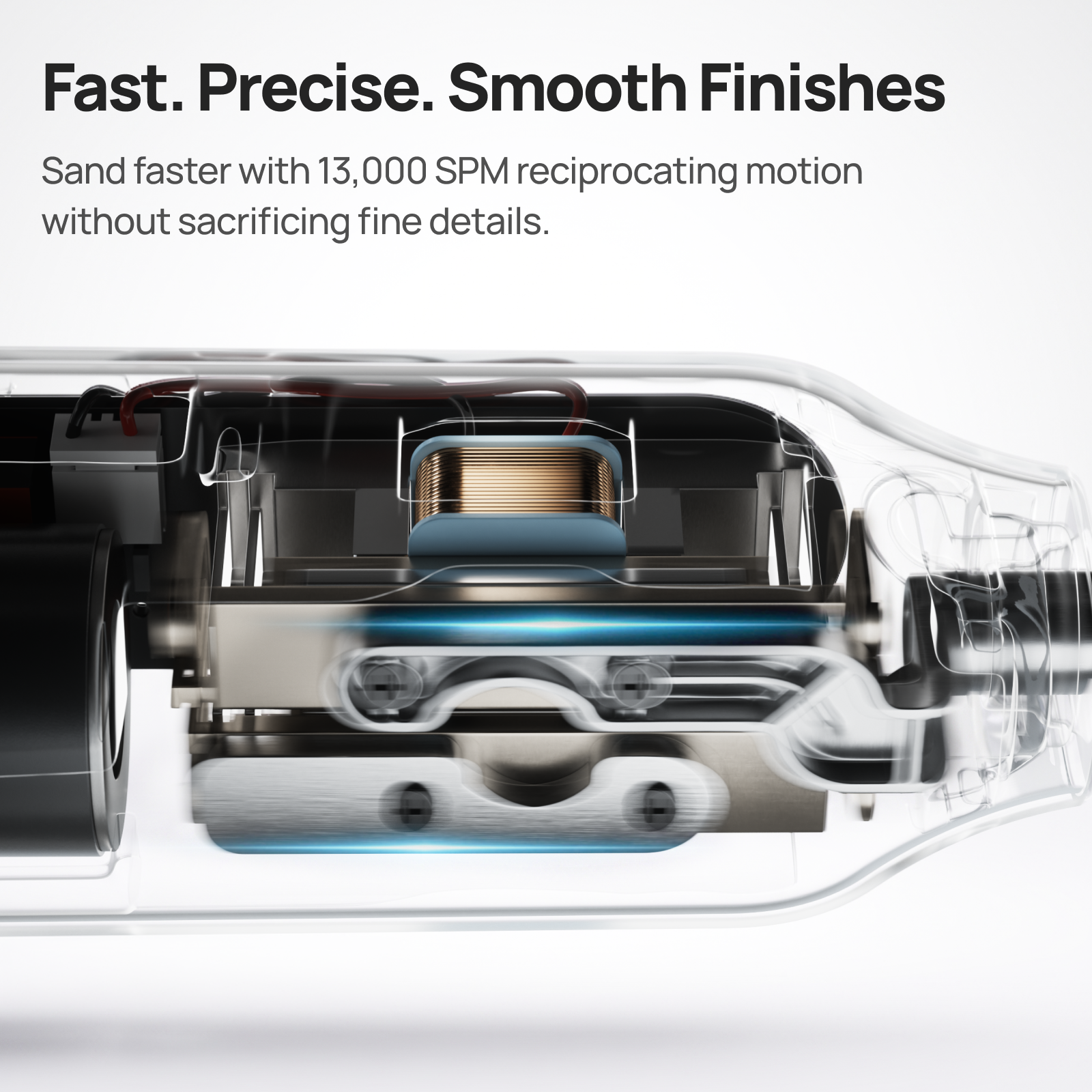
One motion system, two disciplines.The same 13,000 SPM reciprocating motor powers 0.2mm saw blades with patent dual-sided etched teeth. Anti-jam technology prevents binding, while the compact design reaches tight spots that full-size saws can't access.
Two blade types for different cutting needs:
Curved Blades (4 pcs):For straight cuts and material removal.
Jigsaw Blades (4 pcs):For intricate curves and through-cuts.
and precision curve work.
Perfect for cutting resin prints, plastic parts, and wood details.
Add this accessories below ↓

Foam Sandpaper
Foam Sandpaper maintains consistent contact across uneven surfaces, absorbs excess pressure, and delivers controlled material removal—avoiding over-sanding on high spots while evenly sanding the entire surface.
Foam sandpaper uses electrostatic sand planting technology—abrasive particles are bonded directly to the foam surface, creating a single integrated layer that flexes and conforms like the foam itself.
Every Master Sanding Paper Kit includes 3 standard sanding sheets and 1 foam sheet.
Add this accessories below ↓

Pro Case
Take your NeoSander setup anywhere.Craftedfrom premium water-resistant vegan leather—protects against splashes,dust, and impacts.Organized compartments keep NeoSander, heads, blades, and sandpaper secure.Compact design maintains a professional lookwherever you work.For makers who work everywhere.
Add this accessories below ↓

Charging Dock
The NeoSander Charging Dock delivers Type-C fast charging with integrated storage compartments that keep your sandpaper organized, flat and protected.A built-in work tray holds parts and components during sanding—keeping your workpieces secure and your workspace organized.
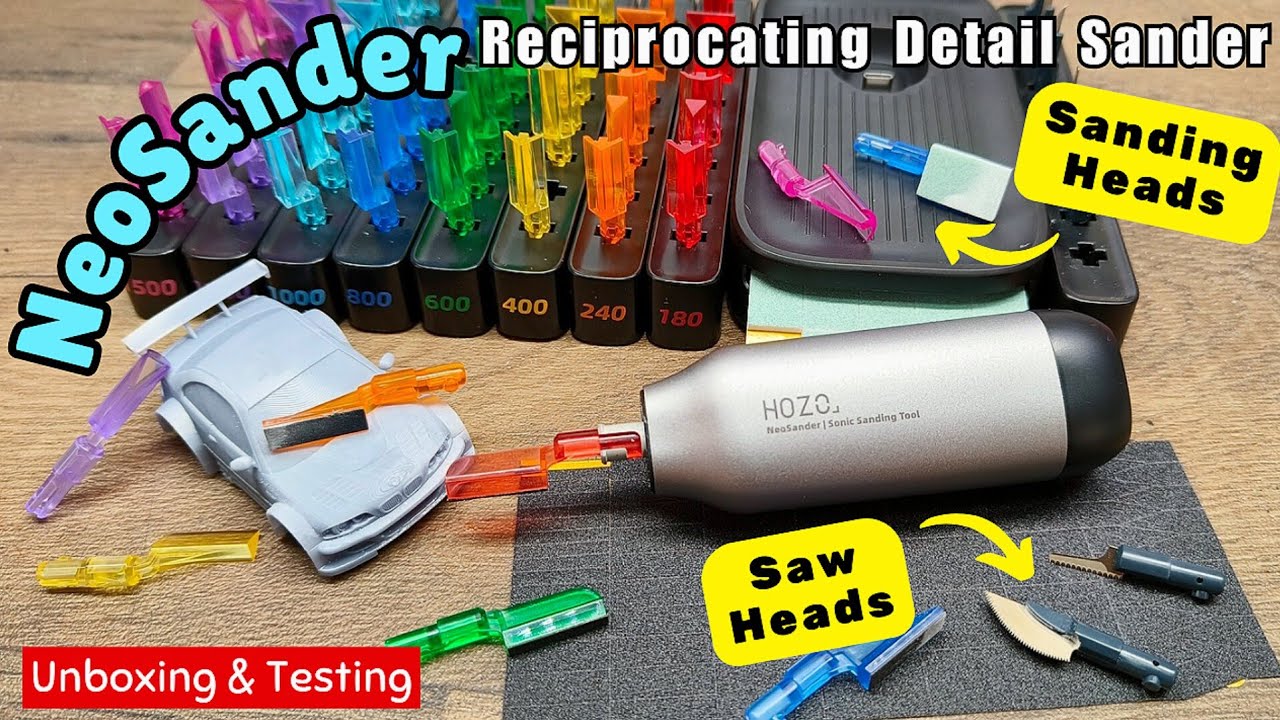
See What Creators Says About NeoSander
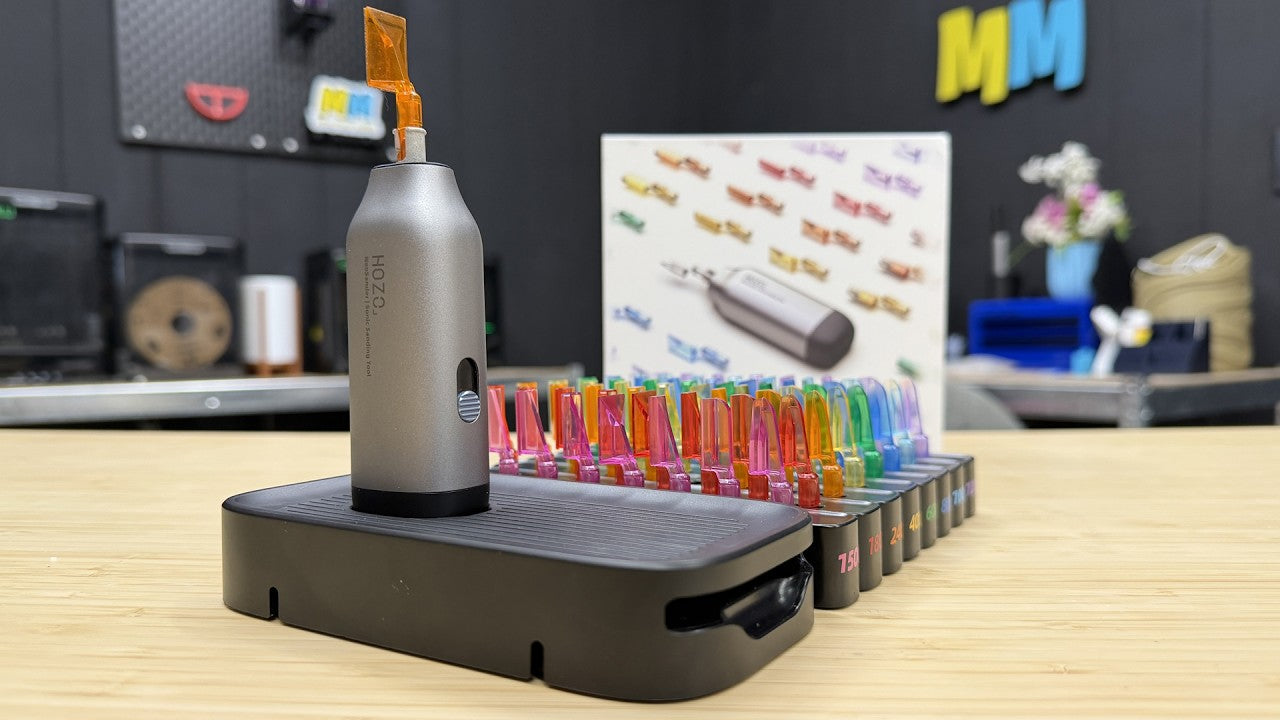
Technical Specifications
Basic
Core parameters
Motor Type: Reciprocating Linear Motor
Power: 0.8-5W (Adjustable)
Rated Speed: 13,000 strokes per minute (SPM)
Stroke Length: 0.6-1.8mm (Infinitely Adjustable)
Concentricity: <0.05mm (6× more precise than competitors)
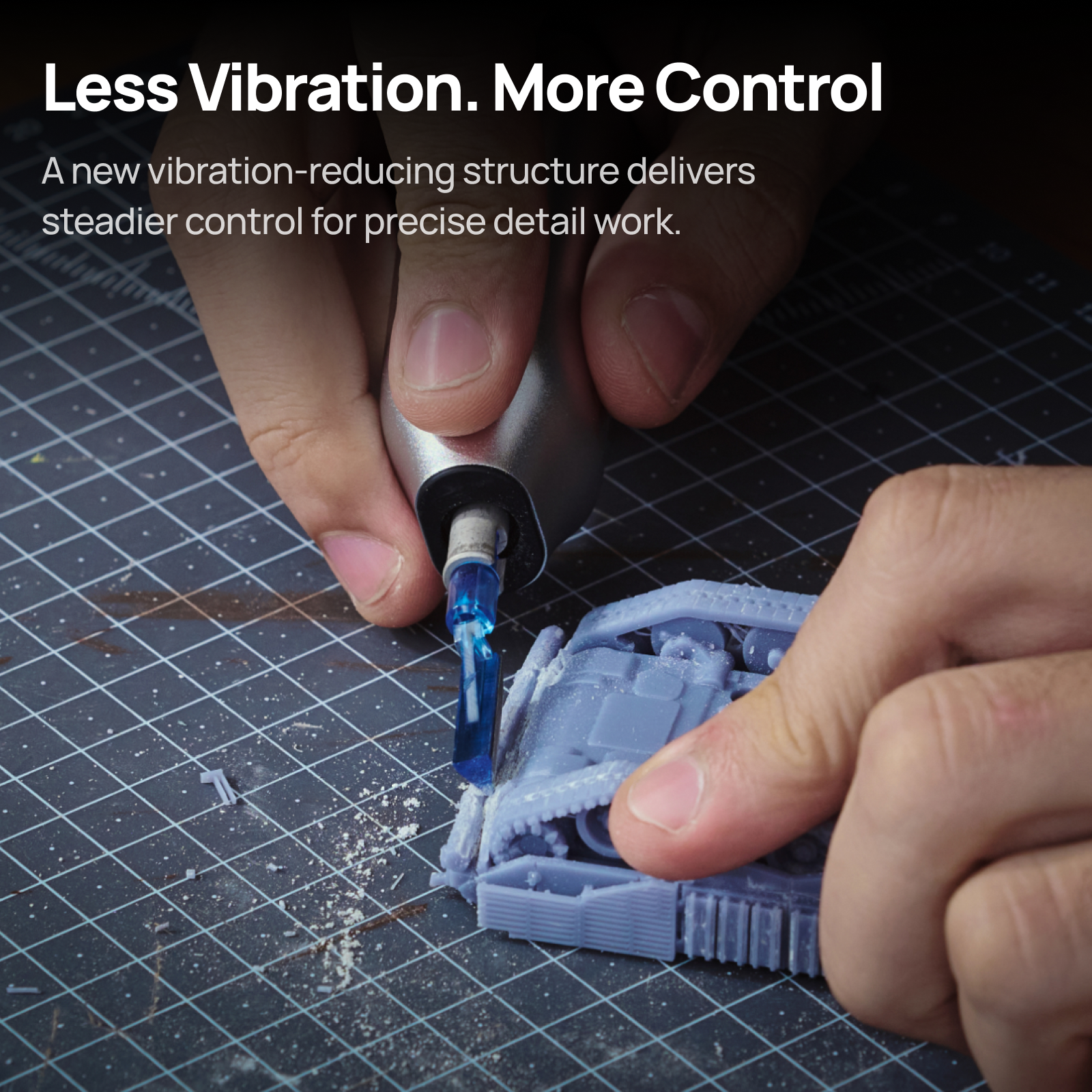
Vibration Reduction: 85% motor vibration reduction
Charging
Battery:3.7V-1100mAh
Runtime:45 min (full load) / 240 min (typical use)
Charging Port: Type-C 5V-1A (PD Compatible)
Charging Options: Direct USB-C or Charging Dock
Use While Charging: Yes
What's includes
Included in the Box
NeoSander
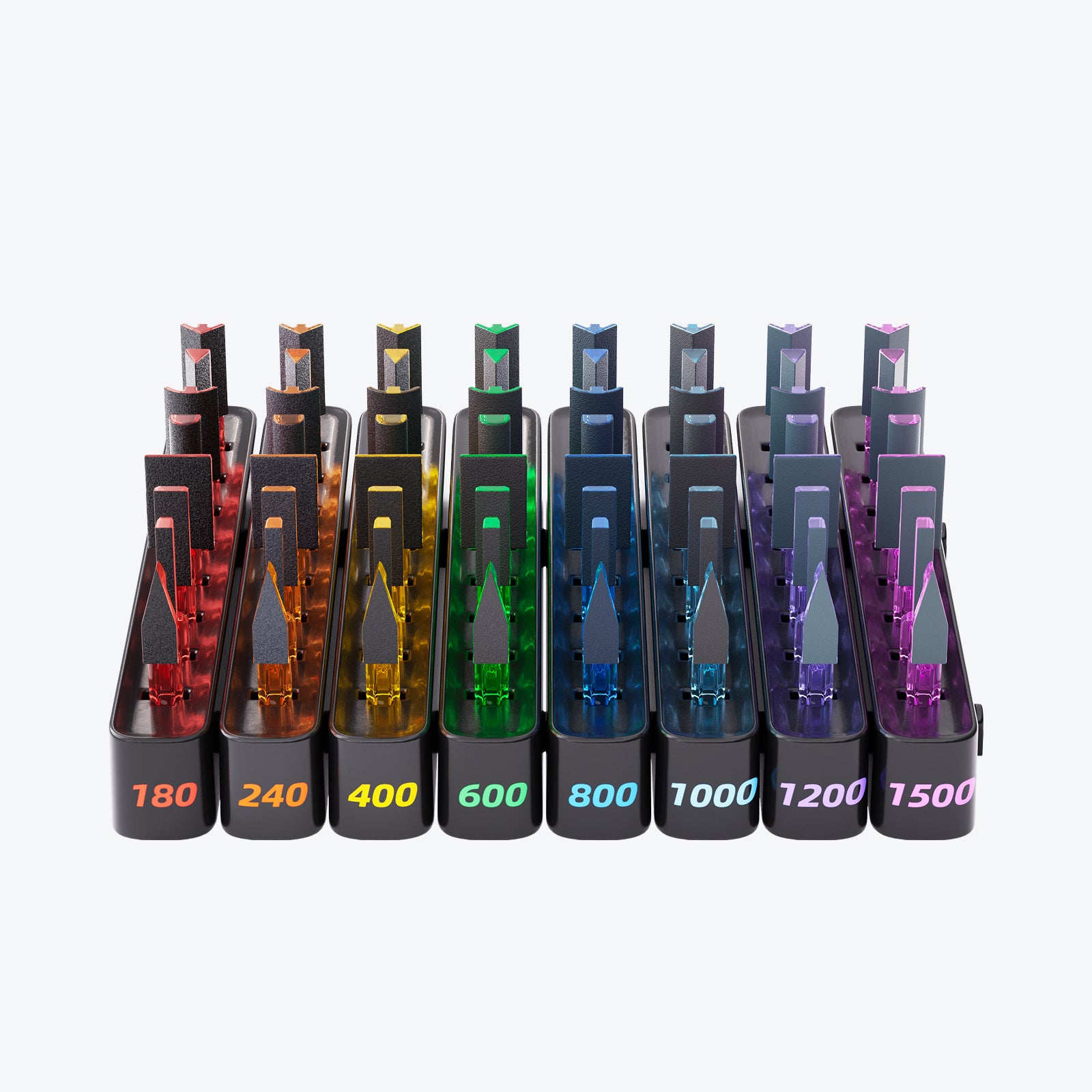
64pcs multicolored Sanding Head
Basic Sanding Paper Kit
Charging Dock
USB-C Charging Cable

User Manual
NeoSander FAQ
Isn't this basically an "electric toothbrush" with sandpaper?
That's probably the most common comparison—and it's understandable. But not everything that moves with sandpaper is suited for precision sanding. What really matters is how it moves, and how controllable that motion is.NeoSander uses a true linear back-and-forth motion—not spinning, not wobbling. Combined with a short, adjustable stroke (0.6–1.8mm) and very low runout (<0.05mm concentricity), each contact stays stable and predictable instead of bouncing around.Sure, an electric toothbrush or a DIY setup can technically sand—just like hand sanding can get results. But NeoSander isn't about whether sanding is possible. It's about making fine detail sanding easier to control, more consistent, and far less tiring.
At 13,000 SPM, won't it melt plastic?
In fine detail sanding, the sanding head only contacts the surface for very brief moments, giving heat very little time to build up. The reciprocating motion is less aggressive than rotary tools, and plastic melting is rare in our testing.
NeoSander also supports wet sanding with waterproof sandpaper, making it easy to further reduce heat when working on sensitive materials like resin prints.
In normal use, NeoSander actually poses less heat risk on plastics than high-speed rotary tools, which maintain constant contact and generate heat far more aggressively.
If I reduce stroke length, will it stall or lose power?
That's a common issue with many sanding tools—and it comes down to how they're built.
Traditional tools use rotary motors, then rely on gears or eccentric mechanisms to turn rotation into sanding motion. At low speeds, especially when you apply side pressure, that system struggles. RPM fluctuates, tools vibrate, and stalling becomes more likely.
NeoSander works differently. It uses a reciprocating linear motor, driving the sanding motion directly:
- No gears
- No eccentric conversion
- No power being "translated" through extra mechanisms
Because of this, the output stays smooth, stable, and predictable. It doesn't depend on sudden bursts of torque, and it's much less sensitive to load changes.
What does the adjustment slider do?
The slider lets you adjust the stroke length from 0.6 to 1.8 mm, tailoring the sanding action to your task:
- Choose a shorter stroke for compact, controlled movements on fine details and delicate areas.
- Choose a longer stroke for broader sanding coverage with each movement.
The head maintains 13,000 strokes per minute throughout the adjustment range, so even at the shortest stroke, you retain rapid sanding action with a smaller, more precise range of movement.
Can it be used on metal, car paint, or powder coating?
Yes. With appropriate sandpaper, NeoSander can be used on metal, automotive paint, and powder coating.
Its linear reciprocating motion is especially effective for controlled, precision sanding—helping you refine edges, blend surfaces, and make small corrections without digging in or overshooting.
When accuracy matters, NeoSander gives you a level of control that's hard to achieve with conventional rotary tools.
Will sanding hard materials cause the sanding head to move more slowly?
When sanding harder materials, the reciprocating speed—or more precisely, the reciprocating frequency—does not actually change. The motor continues to drive the sanding head back and forth at the same rate.
However, when greater force is applied and friction increases, the system has to work harder to overcome that resistance. As a result, the stroke length of the sanding head is shortened. In other words, the number of strokes per minute remains the same, but the distance traveled in each stroke becomes shorter.
This reduction in stroke length can easily create the visual impression that the tool is slowing down, when in reality it’s the amplitude that changes—not the speed or frequency of the motion.
Are the multi-colored sanding heads sold separately?
Yes. The 64pcs Multi-Colored Sanding Head Collection is available separately on our website.
However, if you're purchasing NeoSander for the complete sanding workflow, the NeoSander Premium Combo still offers the best overall value — combining the tool, accessories, and sanding head collection in one setup at a better bundled price.
For creators looking to fully explore NeoSander’s sanding capabilities, the Premium Combo is the most cost-effective option.